
The first thing most visiting anglers get wrong about the Indian River Lagoon is the name. It isn’t a river. It’s a long, shallow estuary of salt and brackish water, tucked behind Florida’s barrier islands, and that one fact explains almost everything about how it fishes. The water is skinny, the fish are often in plain sight, and your day depends on tides, wind, and how quietly you can get within casting range.
We guide the lagoon out of Melbourne on the Space Coast, mostly from a poling skiff and mostly with a fly rod. It’s the same approach we take on the White River back in Arkansas: understand the water first, and the fishing starts to make sense. This guide covers what we’d tell you on the ride out, from what lives here and when it fishes best to how sight fishing actually works.
What the Indian River Lagoon Actually Is
The Indian River Lagoon is a shallow estuary system made up of three connected bodies of water: the Indian River, the Banana River, and Mosquito Lagoon. Calling any of them a river is a bit of a historical stretch. There’s no current pushing downstream the way there is on a tailwater. Water here moves with the tide, the wind, and the few inlets that connect the lagoon to the Atlantic.
Depth is what makes it a sight fishing destination. Much of the lagoon is shallow enough to see the bottom, and that bottom is a mix of grass flats, sand, mud, oyster bars, and mangrove shoreline. Fish feed in that shallow water, and on a calm, sunny day you can watch them do it.
It’s also one of the most biologically diverse estuaries in North America, which is a big part of why it holds so many gamefish. If you want the bigger picture on the system itself, the Indian River Lagoon National Estuary Program is a good place to start.
Indian River vs. Banana River
Both belong to the same system and both offer shallow-water sight fishing, but they don’t fish identically. The Banana River sits between Merritt Island and the barrier island near Cocoa Beach, and its calm, protected water suits a poling skiff well. The Indian River proper is the larger body of water to the west, with more variety in shoreline, depth, and structure along its length.
If the Banana River side is what you’re after, our Banana River fishing charter page goes into more detail.
What You Can Catch in the Indian River Lagoon
Our main targets on the lagoon are redfish, snook, tarpon, black drum, speckled trout, and jack crevalle. Which ones are on the menu depends on the season, the conditions, and how you like to fish, and each one asks something a little different of you.
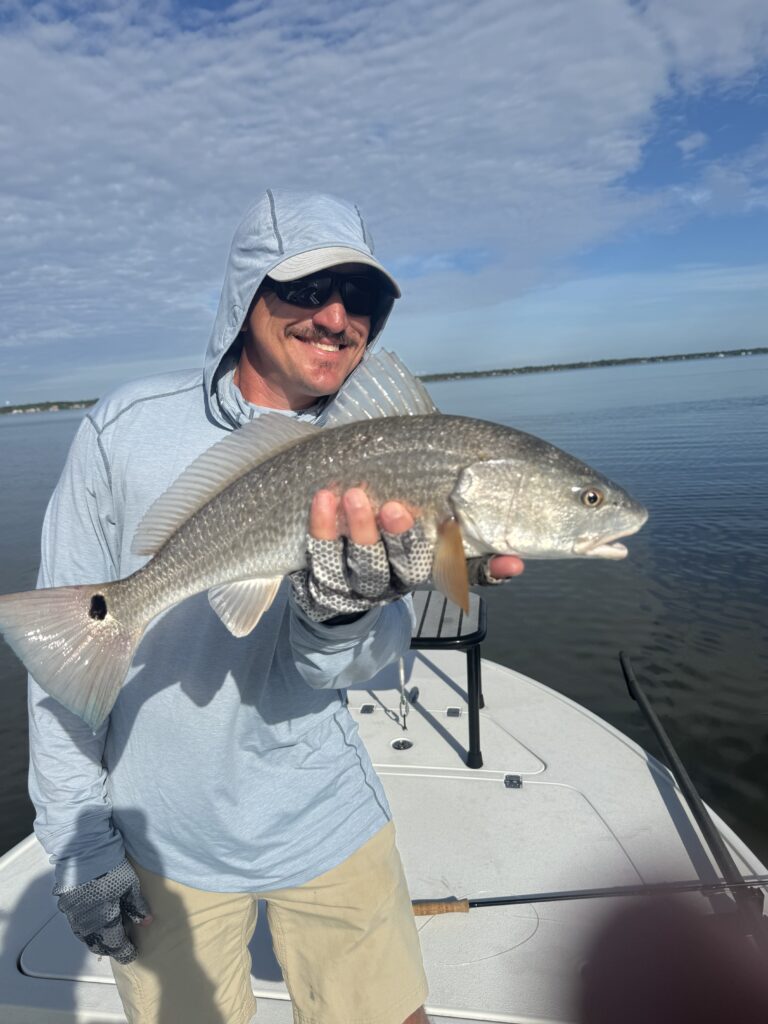
- Redfish are the backbone of the flats. They tail in very shallow water, cruise grass edges, and push wakes you can spot from a distance. A careful, well-placed presentation is what gets them to eat.
- Snook hang around structure and ambush prey. Accuracy matters more than distance here, since a cast that lands a few feet off the mangroves usually gets ignored.
- Tarpon test your timing and patience. You can do everything right and still watch one swim past your fly like it owes you money.
- Black drum get overlooked, but they’re a genuinely technical fish on fly. They feed slowly and spook easily, so stealth goes a long way.
- Speckled trout, also called spotted seatrout, are a common lagoon species and good practice for reading water.
- Jack crevalle are pure fight. They don’t do subtle, and nobody on the boat is complaining.
Juvenile Tarpon vs. Migratory Tarpon
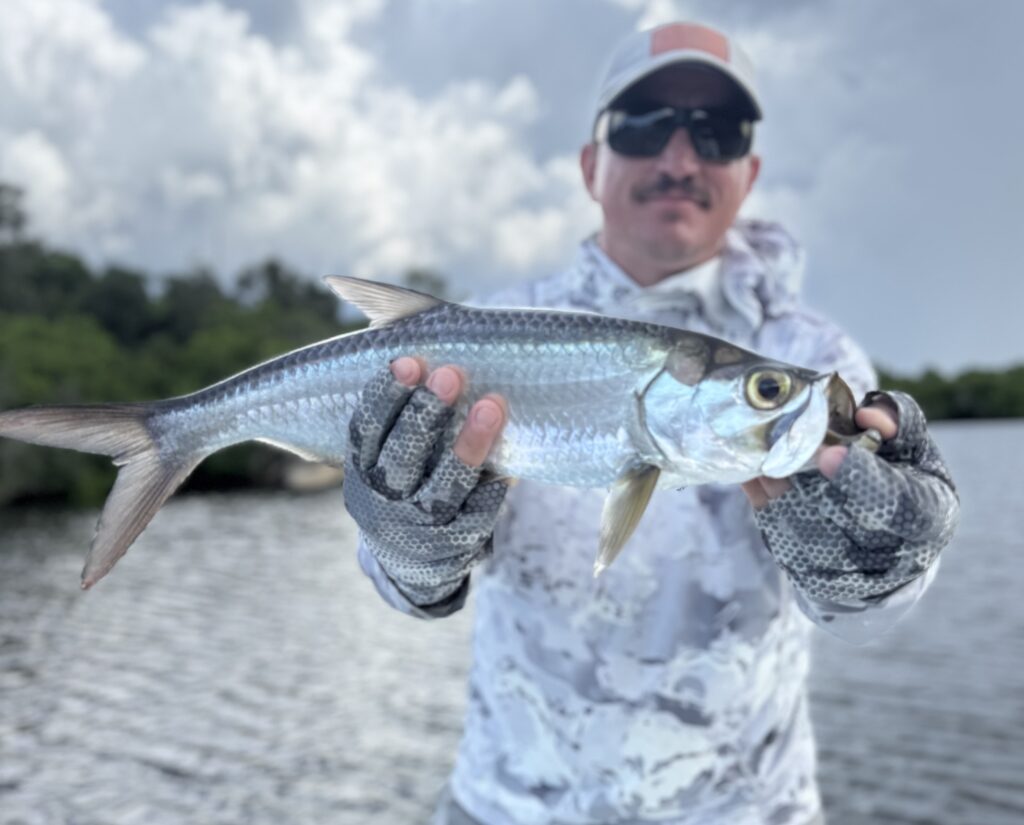
Lagoon tarpon fall into two general groups. Juvenile tarpon are around year-round, while larger migratory fish show up around May and stick around through the summer. Our peak tarpon window runs roughly May through August.
Smaller tarpon make a great introduction to the species on fly. The big migratory fish are a different conversation, and they’ll humble good casters on a regular basis. When tarpon are in the area, our job is to get you into a good position. What happens after the fly lands is mostly up to you, which is exactly why it’s so satisfying when it works.
When to Fish the Indian River Lagoon
The best time to fish the lagoon depends on what you want to catch, because the species mix shifts through the year. Here’s how it generally breaks down:
- Spring and summer bring the main tarpon window, along with active, aggressive snook.
- Fall is when redfish and black drum patterns tend to shine.
- Winter can offer clear water and excellent sight fishing for redfish and drum.
If tarpon are the goal, plan around late spring and summer, when the larger fish move in. Keep in mind that summer afternoons on the Space Coast can turn stormy. We watch the radar closely, and safety calls always come before fishing calls.
Why Wind and Water Clarity Matter More Than the Calendar
Most seasonal guides skip this part, but on a sight fishing trip the day’s conditions matter more than the month. A good month with 20 mph wind and heavy cloud cover can fish worse than an average month with flat water and high sun.
Sight fishing needs three things to line up. You need enough light to see into the water, enough calm to see past the surface, and clear enough water to spot fish before they spot you. Lose one and things get harder. Lose two and you’re mostly casting to places where fish might be, which is a different (and less fun) kind of fishing.
That’s why we build each day’s plan around tides, wind direction, and water clarity, and why that plan can change the morning of your trip. It’s also why we’d rather be straight with you about a tough forecast than pretend every day is a highlight reel.
How Sight Fishing Works From a Poling Skiff
Sight fishing means finding a fish with your eyes and then casting to that specific fish. On the lagoon, we do most of it from a poling skiff, a shallow-draft boat the guide pushes across the flat with a long pole from a platform above the motor.
Poling is slow on purpose. An outboard or trolling motor would push fish off the flat before you ever saw them. From the platform, the guide has a higher vantage point to spot fish, read which way they’re moving, and set the boat up so you get a clean shot.
Your job on the bow is to stay ready, watch where the guide is calling, and make the cast when it counts. That sounds simple until a redfish appears at ten o’clock and you discover your fly line is wrapped around your foot. Everyone does it once. Most people do it twice.
This is also where most of the teaching happens. If you’re new to saltwater, we’ll coach you through spotting fish, reading their behavior, and timing your cast. If you’ve done this before, we’ll focus on shot angles, positioning, and tightening up your presentation.
Spotting Fish Before They Spot You
Seeing fish is a skill, and it improves with practice. A good pair of polarized sunglasses is the most useful thing you can bring, since it cuts the surface glare that hides fish.
Most of the time you won’t see a whole fish clearly at first. You’ll notice something that doesn’t fit: a tail breaking the surface, a nervous ripple moving against the wind, a shadow sliding over sand, or a puff of mud where something was feeding. Learning to trust those small clues is a big part of becoming a better flats angler.
The Cast That Actually Matters
Plenty of anglers assume flats fishing demands long casts. Distance helps sometimes, but accuracy and speed matter more. A quick, accurate 40-foot cast usually beats a long one that lands in the wrong place or takes four false casts to get there.
A little practice before your trip pays off. Work on these:
- Getting the fly out quickly with minimal false casts
- Casting accurately into the wind
- Landing the fly near a target rather than on top of it
- Keeping loose line clear of your feet and the deck
Common Misconceptions About Fishing the Lagoon
“If I can see them, I’ll catch them.” On the lagoon you’ll often see plenty of fish. Whether they eat depends on the cast, the presentation, and the fish’s mood that day. That isn’t a disclaimer so much as the reason the fishing is worth doing.
“I need to be an experienced saltwater angler.” Many of our Florida guests are newer to saltwater fly fishing. A willingness to learn and take coaching matters far more than a long resume. Basic casting experience helps, and we’ll work on the rest together.
Gear: What We Provide and What to Bring
Rods, reels, and terminal tackle are included on every trip, along with instruction throughout the day. Full day and 3/4 day trips also include snacks and beverages. You’re welcome to bring your own rods and reels if you’d rather fish them.
Pack these:
- Polarized sunglasses
- Sun protection, including a hat, sunscreen, and long sleeves
- Weather-appropriate clothing, including a rain layer
- A Florida fishing license, if required
Regulations, Licenses, and Catch and Release
Florida’s saltwater rules are set by the Florida Fish and Wildlife Conservation Commission, and they vary by species and by region. Regulations for redfish and spotted seatrout in the Indian River Lagoon have changed in recent years, so check the current FWC saltwater recreational regulations before fishing on your own. We’d rather send you to the source than list numbers here that could go stale.
On our trips the rule is simpler: every fish goes back. We follow Keep Fish Wet handling practices, which means keeping fish in the water as much as possible, wetting hands before touching them, and supporting them properly for a quick photo if you want one. A healthy release is part of a good day.
Seagrass, Water Quality, and Why It Matters to Anglers
Seagrass is the foundation of the lagoon. It shelters the baitfish, shrimp, and crabs that redfish, trout, and snook feed on, and it’s a big reason the flats fish the way they do. Over roughly the past fifteen years, the lagoon has lost a large share of its seagrass to algae blooms and poor water quality, and anglers have felt the effects.
For us, that’s one more reason to handle fish carefully and teach guests to do the same. It’s also part of why we support Bonefish & Tarpon Trust and its science-based work on healthy flats fisheries. We’d like to keep fishing this place for a long time, and we suspect the redfish feel the same way.
Planning Your Indian River Lagoon Trip
We guide anglers staying in Melbourne, Palm Bay, Merritt Island, Sebastian, Vero Beach, Grant, and nearby Space Coast communities. Melbourne sits about 45 minutes from Orlando, so a day on the flats fits easily into a family trip to Central Florida.
We offer two private, fully guided trip lengths:
- Full day (8 hours): the most time on the water, and the better pick if you’re targeting tarpon or want to cover multiple areas.
- 3/4 day (6 hours): a strong option for redfish, snook, and black drum.
Before your trip, we’ll talk through your goals, your experience level, and what’s been fishing well, then build the day around it. Current rates are on our Trips and Prices page.
A typical day starts with a plan built around the tides and conditions, followed by a lot of time poling flats and looking for shots. Expect coaching on casting, hook sets, and fighting fish properly. Expect a few missed shots, too. Those are part of the education.
Frequently Asked Questions
Do I need saltwater experience to fish the Indian River Lagoon?
No. We guide anglers of all skill levels and coach throughout the trip. Some freshwater fly casting experience helps, but plenty of guests show up new to saltwater and leave with a much better sense of how the flats work.
What is the best month to fish the Indian River Lagoon?
It depends on your target species. Tarpon peak roughly May through August, fall tends to be strong for redfish and black drum, and winter can bring clear water for sight fishing. On any given day, wind and water clarity will matter as much as the calendar.
Can you fly fish the Indian River Lagoon?
Yes, and the shallow, clear flats suit it well. Sight casting to redfish, snook, black drum, and tarpon from a poling skiff is what most of our lagoon trips are built around.
Is the Indian River Lagoon good for redfish?
Redfish are one of the lagoon’s signature species and a staple of our trips. They feed in very shallow water, which makes them a great fish for learning to sight cast. Redfish rules in this region have changed recently, so check FWC for current regulations if you fish on your own.
Do I need a fishing license on a guided charter in Florida?
Check with your guide before the trip. Licensing on charters can vary, so it’s worth confirming ahead of time.
Is fishing the Indian River Lagoon family-friendly?
Yes. We regularly guide families visiting the Space Coast and adjust pacing and instruction to fit the group. It works especially well when one person is an experienced angler and another is picking up a fly rod for the first time.
Fish the Lagoon With Us
The Indian River Lagoon rewards anglers who pay attention. Tides, wind, light, and grass all shape where fish feed and how they react to a fly, and the more of that you understand, the more often a shot turns into a fish. That’s the part we enjoy teaching most.
Our goal on every trip is for you to leave a more capable, self-sufficient flats angler than when you stepped on the boat, with a few new skills and probably a little homework. If that sounds like your kind of day, take a look at our Indian River Lagoon fishing charters and get in touch to start planning.